
Beyond the Flowers, Into the Desert — Georgia O'Keeffe's Discovery of a New American Beauty
A single enormous flower fills the canvas. Its petals unfurl in gentle curves, while colors flow into one another, creating an image that seems almost abstract. Yet elsewhere in the same artist's work, we encounter sun-bleached animal skulls and the rugged ridgelines of a barren desert. The artist behind these seemingly different worlds is Georgia O'Keeffe (1887–1986). What led her from the delicate beauty of flowers to the raw landscapes of the American West?
자세히 보기
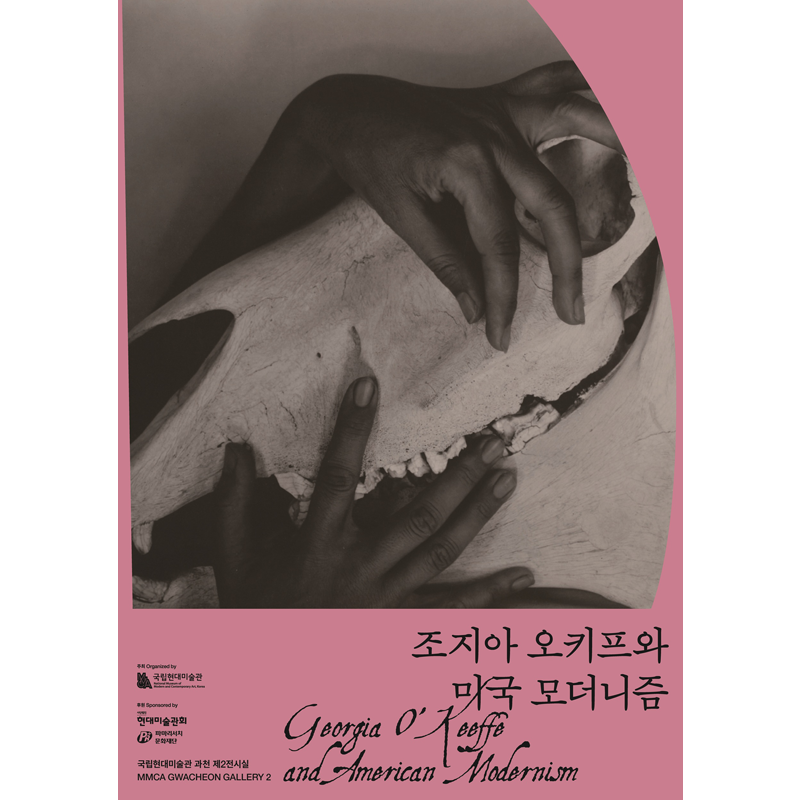
*Georgia O'Keeffe and American Modernism*, presented at the National Museum of Modern and Contemporary Art (MMCA) in Gwacheon, explores this question, revealing how one artist developed such a distinctive visual language. What makes the exhibition particularly compelling is that it is not simply a retrospective devoted to O'Keeffe. It also tells the stories of the painters and photographers who explored new artistic possibilities alongside her, as well as the remarkable figure who brought them together.
[[cards:artist:577,,art_concept:1253]]
At the heart of this story is Alfred Stieglitz (1864–1946), a photographer and gallery owner who played a pivotal role in establishing photography as an independent art form. In early twentieth-century New York, he championed experimental artists through his gallery, introducing audiences to bold new approaches to art. His gallery, famously known as "291," became an important meeting point between emerging European artistic movements and a new generation of American artists.
Artists such as Arthur Dove, John Marin, Marsden Hartley, and Charles Demuth gathered around Stieglitz. While they embraced the experiments in Cubism and abstraction emerging from Europe, they were not content merely to imitate them. Instead, they sought their own visual languages to express American cities, natural landscapes, and an increasingly industrialized world. American Modernism was not a single artistic style, but a collection of efforts by different artists to see and represent a changing world in new ways.
자세히 보기
Drawing primarily on the Alfred Stieglitz Collection at the Art Institute of Chicago, the exhibition offers an opportunity to encounter these artists' works side by side. As you explore the galleries, consider how differently each artist interpreted the same era. John Marin's dynamic landscapes, Arthur Dove's abstract forms inspired by nature, Marsden Hartley's powerful colors, and Charles Demuth's precise geometric compositions reveal the extraordinary diversity of American Modernism.
The photographs deserve equal attention. Paul Strand and Edward Weston approached the camera not merely as a tool for documenting reality, but as an artistic medium capable of revealing unexpected beauty in form and light. Their emphasis on contours, contrasts, and composition becomes especially fascinating when viewed alongside paintings of the period. Photography sometimes pursued a beauty traditionally associated with painting, while painters, in turn, experimented with photographic techniques such as dramatic close-ups and bold cropping.
And then the exhibition brings us back to O'Keeffe.
When O'Keeffe first visited New Mexico in 1929, she discovered a landscape that would transform her art. The vast skies, arid earth, unusually shaped mountains, and animal bones bleached white by the sun offered a world unlike anything she had experienced in New York. For years, she divided her time between New York and New Mexico before settling permanently in the Southwest in 1949.
When looking at O'Keeffe's New Mexico paintings, the most important question is not simply what she painted, but how she chose to see it. An animal skull might appear to symbolize death, but for O'Keeffe, it was also a striking natural form that expressed the vitality and beauty of the desert. Mountains and cliffs, rather than being faithfully reproduced, are transformed through simplified contours and colors into images that verge on abstraction.
In her art, flowers and deserts are not entirely separate subjects. The curves of flower petals echo the contours of desert ridges, while the organic shapes of plants find their counterparts in the smooth surfaces of animal bones. Running through all these works is a consistent fascination with reimagining nature through her own distinctive vision. The exhibition's paintings of New Mexico landscapes and skulls, together with works from her later years, offer a chance to see how that vision deepened over the course of her long career.
Another highlight not to be missed is the collection of photographic portraits of O'Keeffe. Stieglitz photographed her extensively over many years, and the two became both artistic partners and husband and wife. Yet it would be a mistake to understand O'Keeffe merely as an artist discovered by Stieglitz. She forged an independent artistic identity and became one of the defining figures of American modern art. Comparing the way she appears through another artist's lens with the paintings she created herself invites us to consider the difference between how an artist is seen by others and how that artist sees the world.
Ultimately, *Georgia O'Keeffe and American Modernism* tells a story that reaches far beyond the achievements of a single genius. New art emerges when people with different ideas come together, influence one another, and sometimes choose to follow their own paths.
As you leave the exhibition, what stays with you may not be only O'Keeffe's flowers or desert landscapes. Perhaps just as memorable will be the image of a group of artists gathered in a small New York gallery a century ago, imagining what art might become. The question they asked remains as relevant today as it was then: Can we find an entirely new way to express the world we think we already know?
자세히 보기
*Georgia O'Keeffe and American Modernism*, presented at the National Museum of Modern and Contemporary Art (MMCA) in Gwacheon, explores this question, revealing how one artist developed such a distinctive visual language. What makes the exhibition particularly compelling is that it is not simply a retrospective devoted to O'Keeffe. It also tells the stories of the painters and photographers who explored new artistic possibilities alongside her, as well as the remarkable figure who brought them together.
[[cards:artist:577,,art_concept:1253]]
At the heart of this story is Alfred Stieglitz (1864–1946), a photographer and gallery owner who played a pivotal role in establishing photography as an independent art form. In early twentieth-century New York, he championed experimental artists through his gallery, introducing audiences to bold new approaches to art. His gallery, famously known as "291," became an important meeting point between emerging European artistic movements and a new generation of American artists.
Artists such as Arthur Dove, John Marin, Marsden Hartley, and Charles Demuth gathered around Stieglitz. While they embraced the experiments in Cubism and abstraction emerging from Europe, they were not content merely to imitate them. Instead, they sought their own visual languages to express American cities, natural landscapes, and an increasingly industrialized world. American Modernism was not a single artistic style, but a collection of efforts by different artists to see and represent a changing world in new ways.
자세히 보기
Drawing primarily on the Alfred Stieglitz Collection at the Art Institute of Chicago, the exhibition offers an opportunity to encounter these artists' works side by side. As you explore the galleries, consider how differently each artist interpreted the same era. John Marin's dynamic landscapes, Arthur Dove's abstract forms inspired by nature, Marsden Hartley's powerful colors, and Charles Demuth's precise geometric compositions reveal the extraordinary diversity of American Modernism.
The photographs deserve equal attention. Paul Strand and Edward Weston approached the camera not merely as a tool for documenting reality, but as an artistic medium capable of revealing unexpected beauty in form and light. Their emphasis on contours, contrasts, and composition becomes especially fascinating when viewed alongside paintings of the period. Photography sometimes pursued a beauty traditionally associated with painting, while painters, in turn, experimented with photographic techniques such as dramatic close-ups and bold cropping.
And then the exhibition brings us back to O'Keeffe.
When O'Keeffe first visited New Mexico in 1929, she discovered a landscape that would transform her art. The vast skies, arid earth, unusually shaped mountains, and animal bones bleached white by the sun offered a world unlike anything she had experienced in New York. For years, she divided her time between New York and New Mexico before settling permanently in the Southwest in 1949.
When looking at O'Keeffe's New Mexico paintings, the most important question is not simply what she painted, but how she chose to see it. An animal skull might appear to symbolize death, but for O'Keeffe, it was also a striking natural form that expressed the vitality and beauty of the desert. Mountains and cliffs, rather than being faithfully reproduced, are transformed through simplified contours and colors into images that verge on abstraction.
In her art, flowers and deserts are not entirely separate subjects. The curves of flower petals echo the contours of desert ridges, while the organic shapes of plants find their counterparts in the smooth surfaces of animal bones. Running through all these works is a consistent fascination with reimagining nature through her own distinctive vision. The exhibition's paintings of New Mexico landscapes and skulls, together with works from her later years, offer a chance to see how that vision deepened over the course of her long career.
Another highlight not to be missed is the collection of photographic portraits of O'Keeffe. Stieglitz photographed her extensively over many years, and the two became both artistic partners and husband and wife. Yet it would be a mistake to understand O'Keeffe merely as an artist discovered by Stieglitz. She forged an independent artistic identity and became one of the defining figures of American modern art. Comparing the way she appears through another artist's lens with the paintings she created herself invites us to consider the difference between how an artist is seen by others and how that artist sees the world.
Ultimately, *Georgia O'Keeffe and American Modernism* tells a story that reaches far beyond the achievements of a single genius. New art emerges when people with different ideas come together, influence one another, and sometimes choose to follow their own paths.
As you leave the exhibition, what stays with you may not be only O'Keeffe's flowers or desert landscapes. Perhaps just as memorable will be the image of a group of artists gathered in a small New York gallery a century ago, imagining what art might become. The question they asked remains as relevant today as it was then: Can we find an entirely new way to express the world we think we already know?